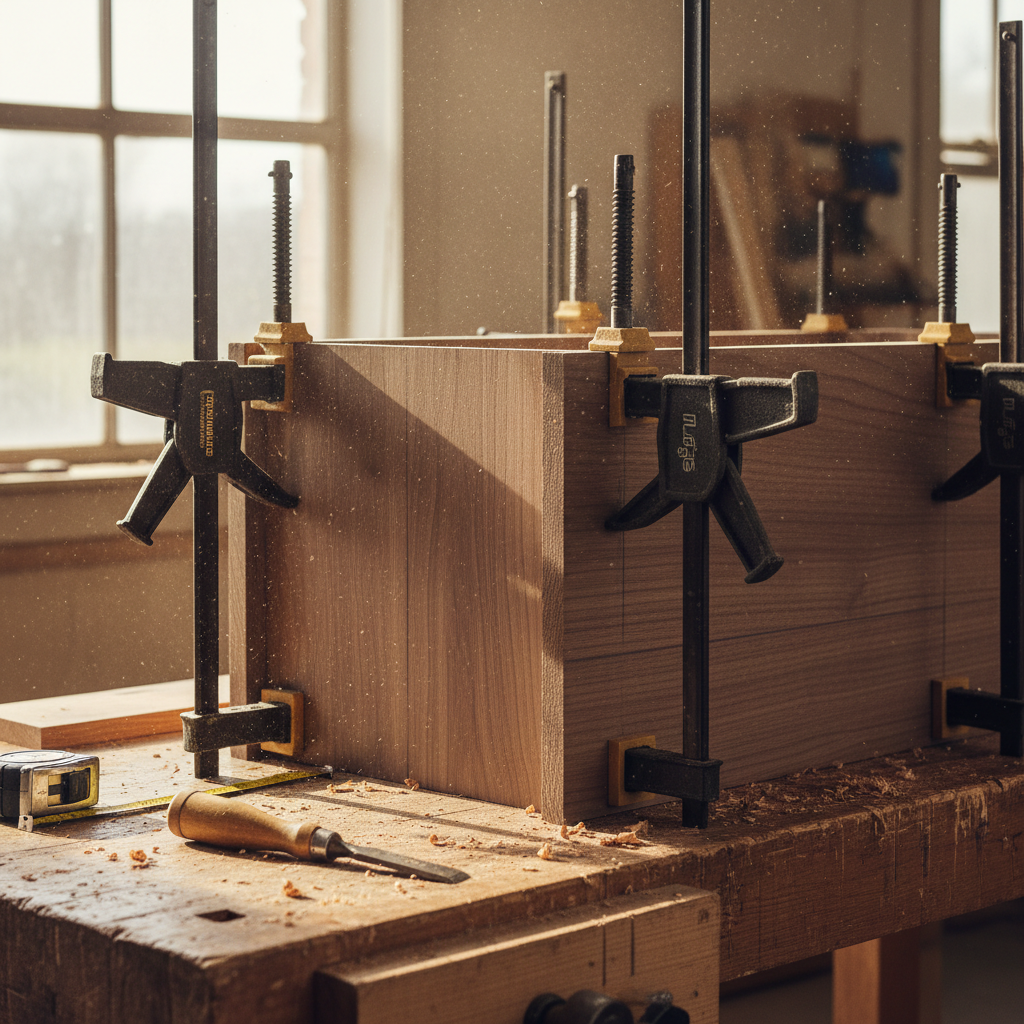
London · Est. 2008 · Georgian Cabinetmaking
Furniture
drawn before
it is built.
Every mortise cut by hand against pencil lines drawn on cartridge paper. Solid walnut and quarter-sawn oak, in Georgian proportions that have not changed in three hundred years.
The Making
Four chapters in the life
of a single piece.
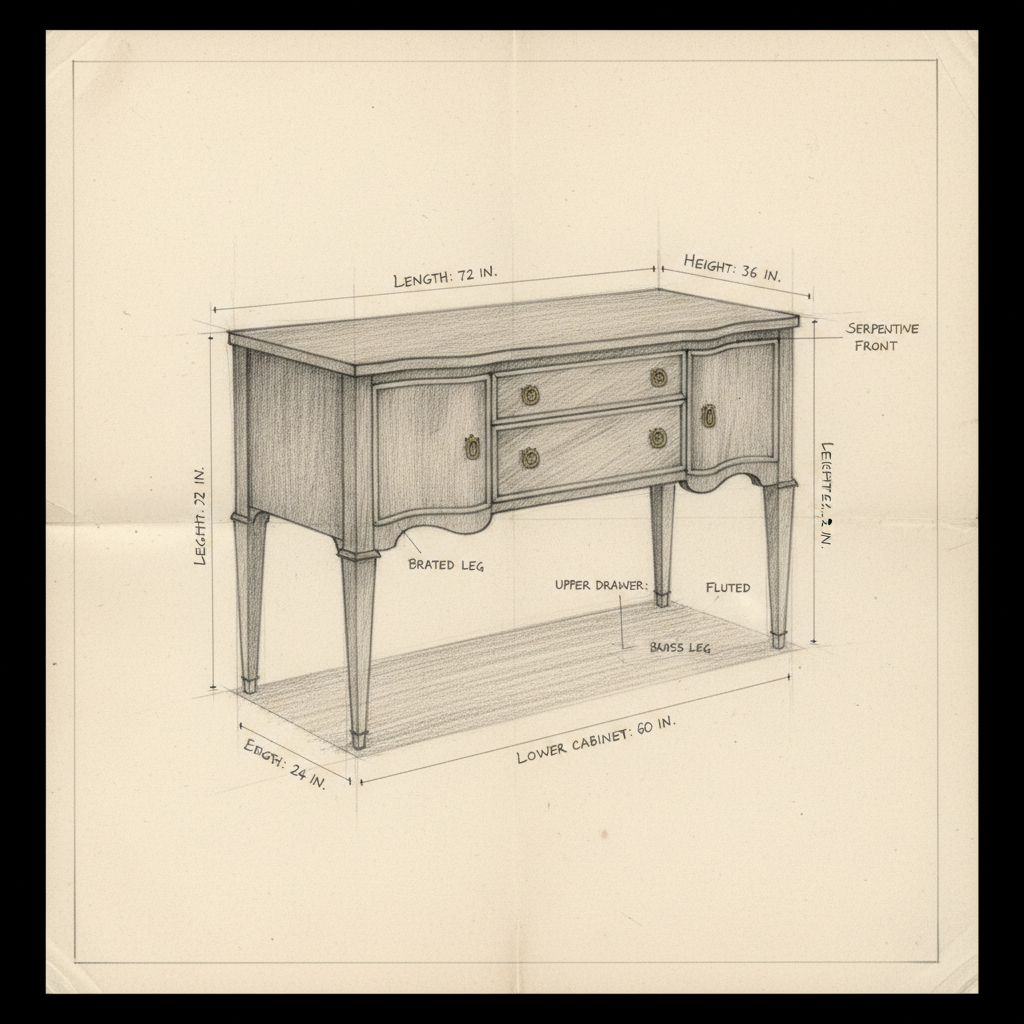
The Pencil & Paper
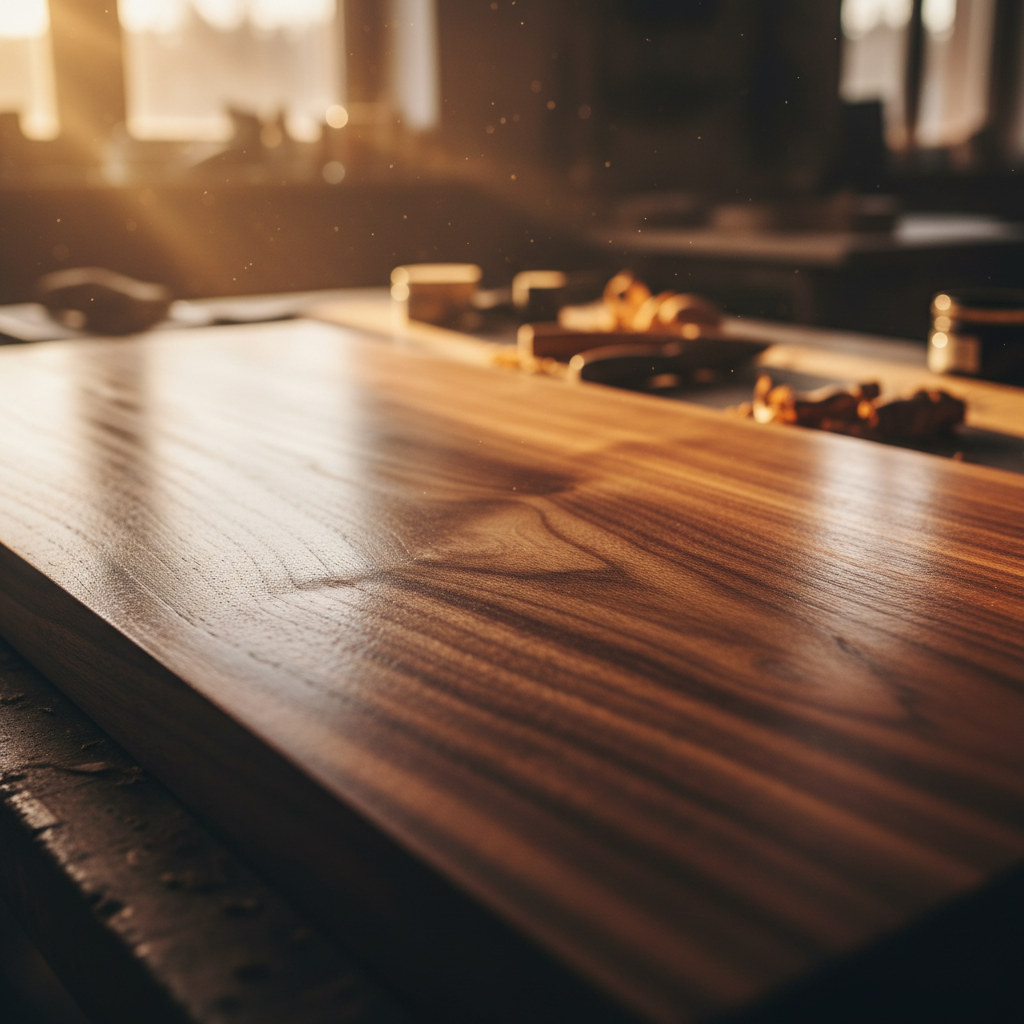
Every piece begins as a drawing.
Before a single shaving falls, the piece exists in pencil on cartridge paper. We work from Georgian pattern books — Hepplewhite, Sheraton, Chippendale — studying the proportions that made eighteenth-century furniture the measure of all things. The drawing is not a sketch. It is a contract between maker and material: every tenon shoulder, every reeded leg, every brass escutcheon placed before the timber is touched.
Clients receive a copy of the working drawing, rolled in a linen tube, as part of every commission. It is as much a document of the piece as the piece itself.
Timber Selection
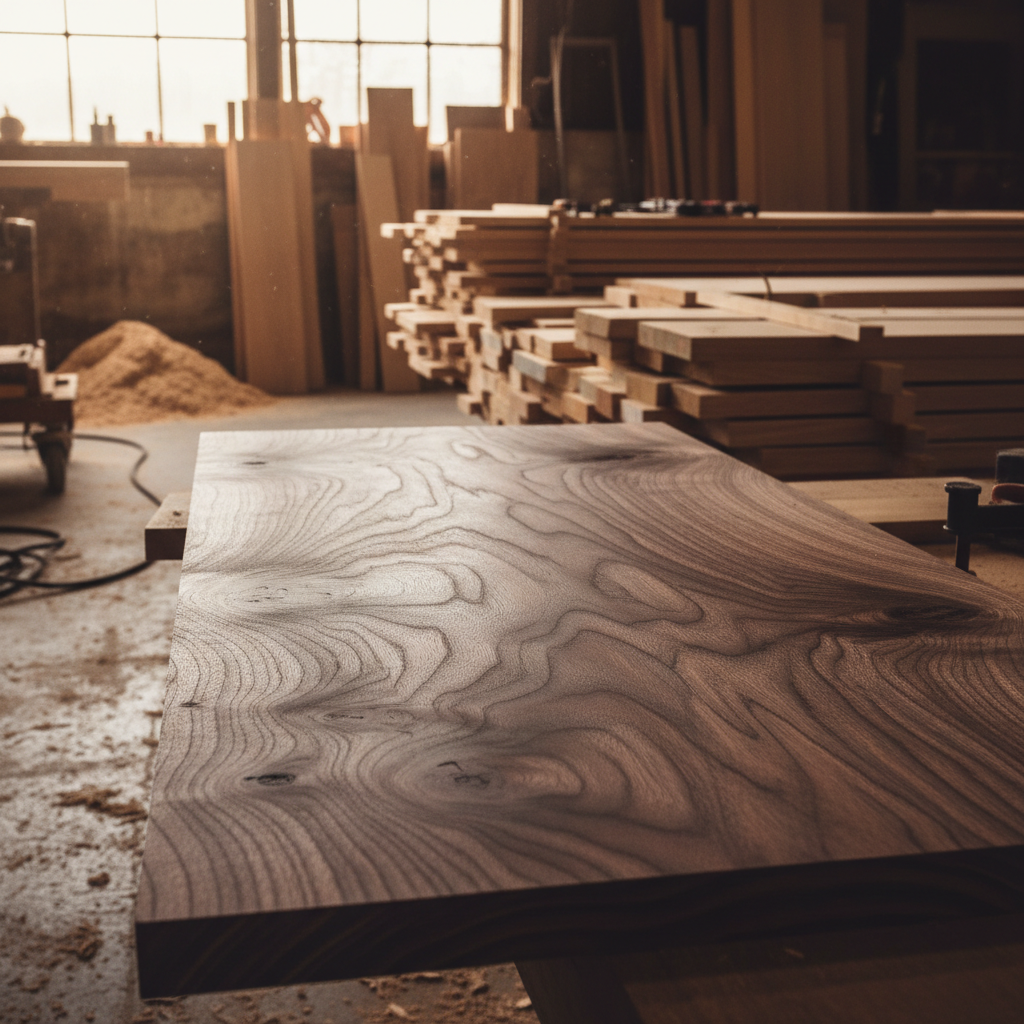
We buy boards, not batches.
Walnut arrives from a single estate in the Dordogne; quarter-sawn English oak from a sawmill in Worcestershire that cuts to order. Each board is examined for figure, ray fleck, and moisture content before it enters the workshop. Figured timber is matched across drawer fronts and door panels with the same care a bookbinder uses for marbled end-papers.
Air-dried for a minimum of two years in our Oxfordshire store. Kiln-dried timber is not used. The movement of the wood is part of the piece.
Joint Cutting
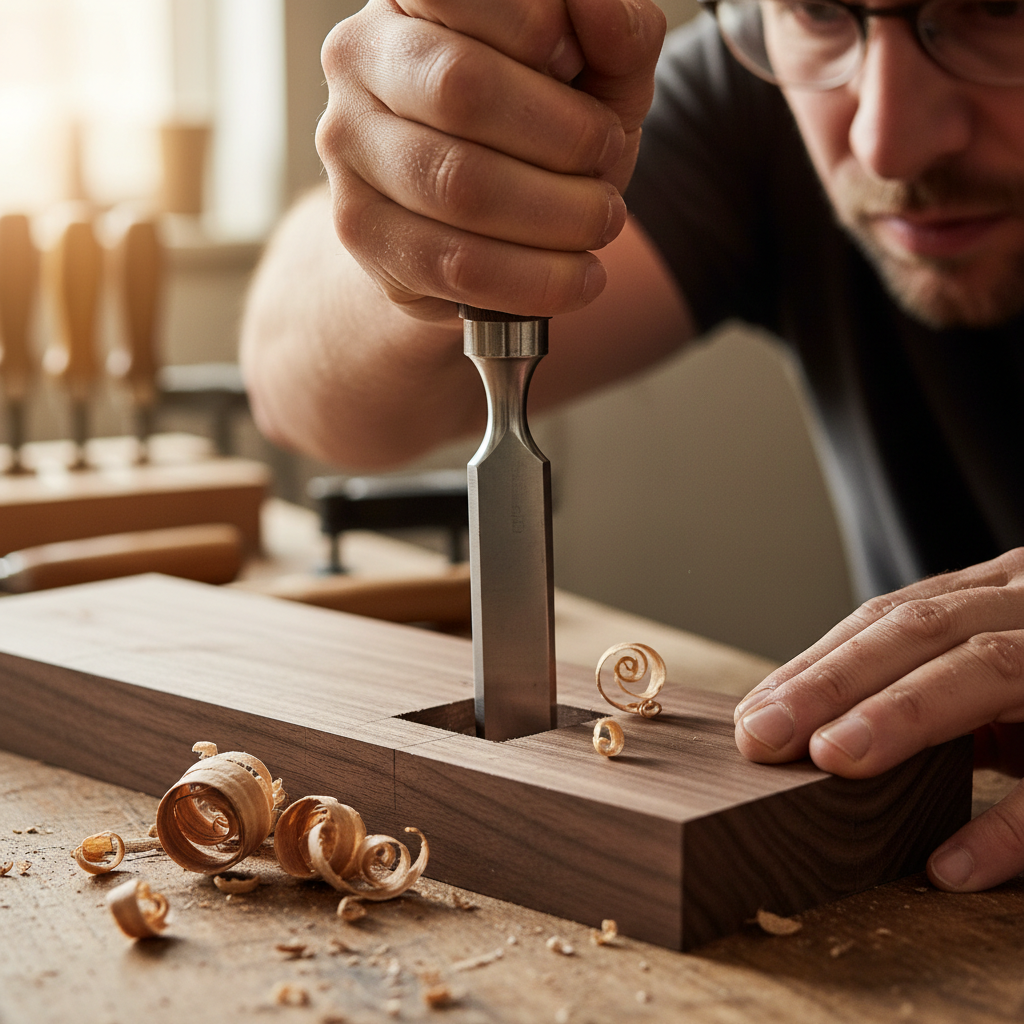
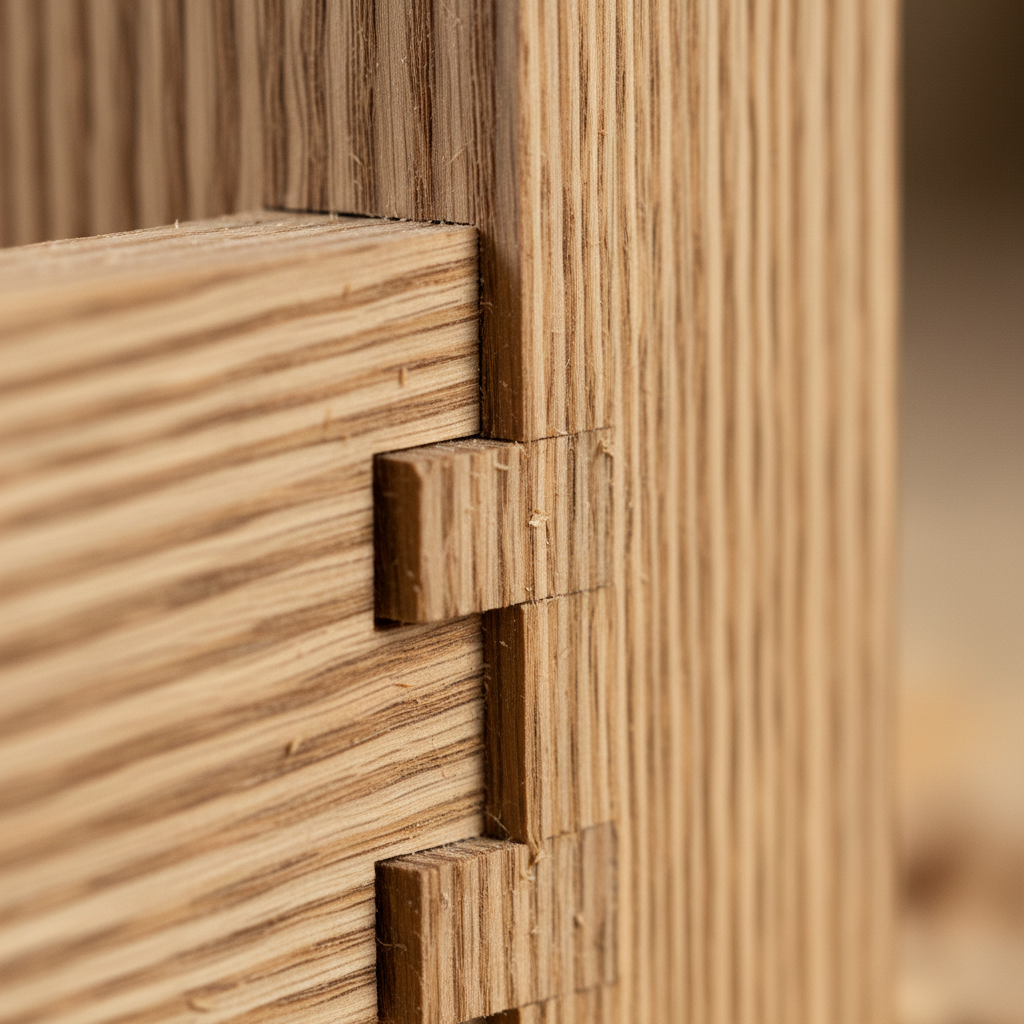
The mortise is cut by hand.
We do not use CNC machinery. Every mortise is chopped with a registered mortise chisel to a pencil line; every dovetail is sawn and pared to a knife wall. This is not nostalgia. It is the only way to produce the tight, springy fit that makes a piece last three centuries. A machine-cut mortise has tolerance. A hand-cut mortise has none.
A single Pembroke table requires approximately forty individual hand-cut joints. We allow three days for the joinery alone.
The Finish
Oil, wax, and patience.
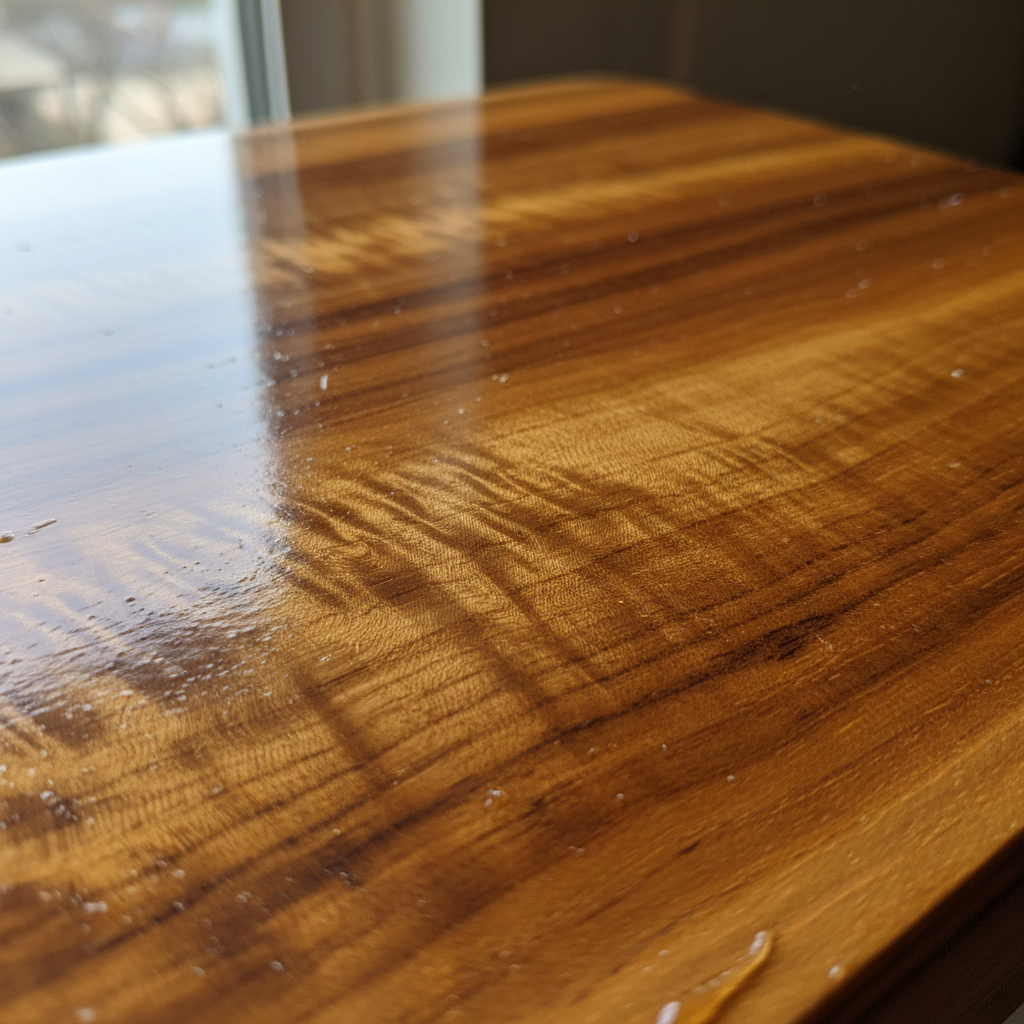
No lacquer. No polyurethane. We finish in raw linseed oil followed by beeswax, applied in thin coats and burnished between each. The surface that results is not a coating — it is a depth. You can see into it the way you can see into water. It improves with age and can be repaired by any competent polisher in any century.
The finishing process takes four days. The piece is then rested for a further week before delivery, allowing the oils to fully oxidise.
The Standard
Close enough to see
the chisel marks.
The marks of the tool are not defects. They are the evidence of the hand. A surface that shows no trace of how it was made was made by a machine. Our surfaces show every stage of their making — and improve with every year of use.
"The Pembroke table Joinery made for the drawing room at Holt Park is, without question, the finest piece of contemporary furniture I have placed in twenty years of interior design. Clients ask about it before they ask about anything else."
Harriet Vane-Tempest
Interior Designer, Vane-Tempest Associates · London
"We commissioned a set of eight dining chairs for the restoration of a Grade I listed townhouse in Edinburgh. The proportions are historically immaculate and the joinery has not moved in three years of use. That is the test."
Alasdair Mackintosh
Heritage Homeowner · Edinburgh
The Collection
Each piece, priced
in full transparency.
Prices include all making, finishing, and white-glove delivery to anywhere in the United Kingdom.
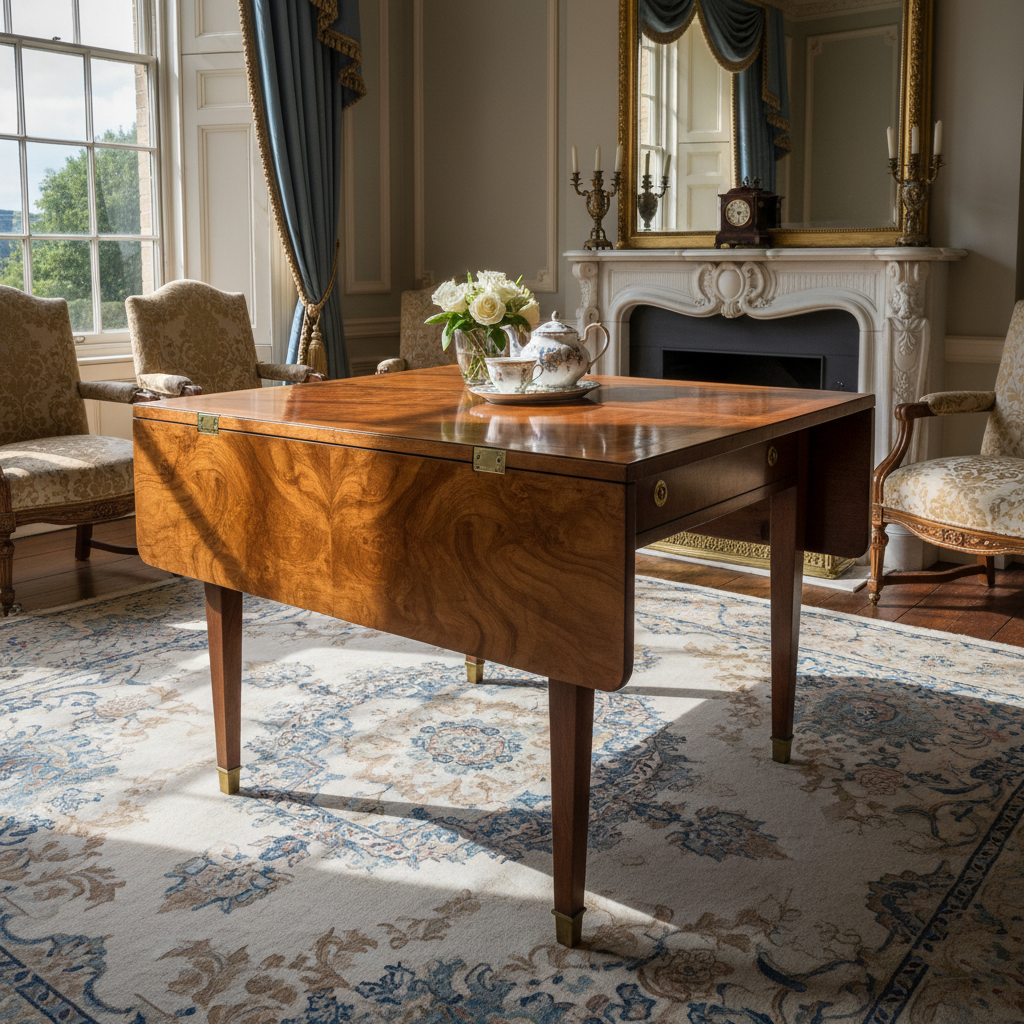
Pembroke Table
After Hepplewhite, c.1788
Two drop leaves supported on fly rails, single drawer, square tapered legs with spade feet. The proportions are taken directly from Hepplewhite's Cabinet-Maker and Upholsterer's Guide.
Timber
Solid Walnut
Dimensions
36″ open × 20″ × 29″ h
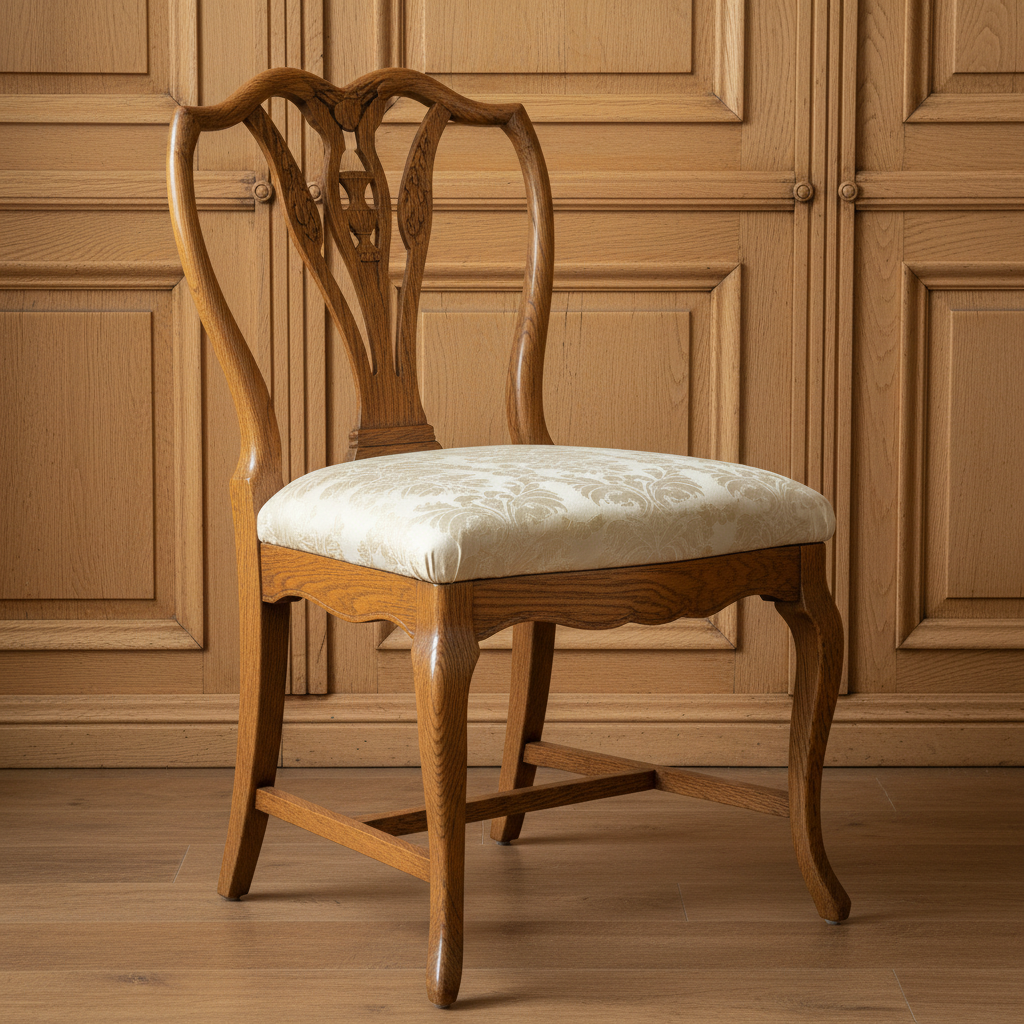
Shield-back Chair
After Hepplewhite, c.1792
The Hepplewhite shield back in its purest form — three carved splats, upholstered slip seat, sabre front legs. Available as a set of four, six, or eight for dining.
Timber
Quarter-sawn Oak
Dimensions
22″ w × 18″ d × 38″ h
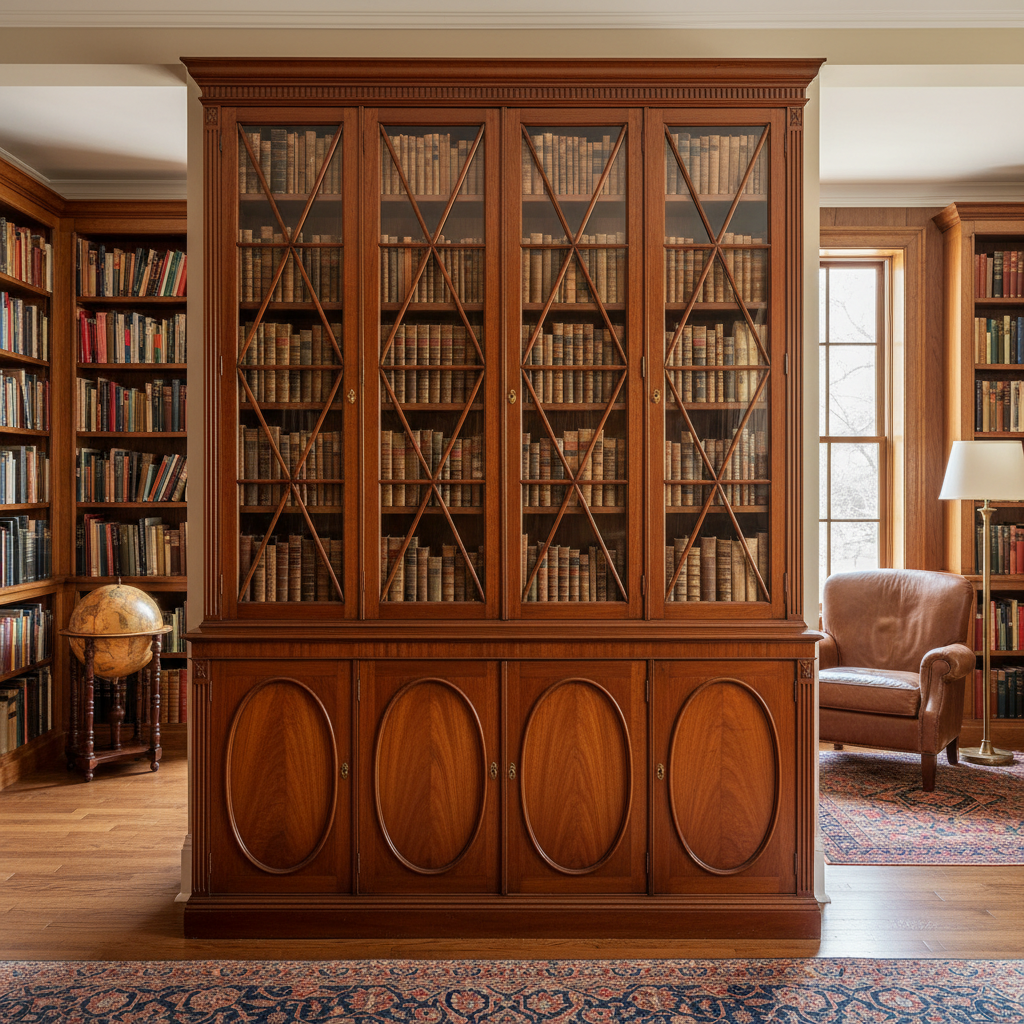
Breakfront Bookcase
After Sheraton, c.1795
A library piece. Glazed upper section with astragal bars, solid lower doors with oval panels, central breakfront with adjustable shelving. Made to order in three widths.
Timber
Cuban Mahogany
Dimensions
72″ w × 18″ d × 84″ h
Not in the collection?
Every piece is made to order.
If you have a period piece you wish to match, a space that requires specific dimensions, or a design from a pattern book we have not yet built — write to us.
Write to the Workshop